
Short answer: smoking doesn’t automatically rule out dental implants. But it’s one of the most important risk factors your dentist will look at, because it can affect healing, bone, gums and how well an implant holds up over the years.
If you smoke, vape or use any nicotine product, the best thing you can do is be upfront about it from the start. Whether dental implants are right for you should come from an individual evaluation, not from a one-size-fits-all promise.
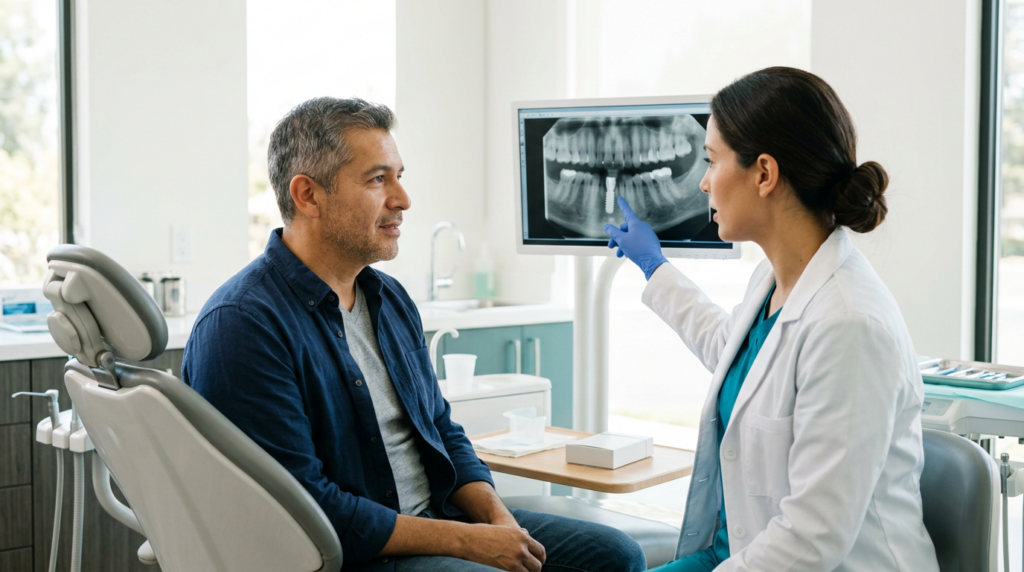
Key takeaways
- Many smokers can still be candidates for dental implants after an individual evaluation.
- Large reviews link smoking to roughly twice the risk of implant failure, plus more bone loss around the implant.[1][2]
- The more you smoke, the higher the risk tends to be.[3]
- Vaping, cannabis and smokeless tobacco should also be disclosed to your dentist.
- Healthy gums, good hygiene and regular maintenance matter as much as the surgery itself.
Can Smokers Get Dental Implants?
Yes, many smokers can. Research doesn’t say smokers can’t get implants. It says smoking is associated with:
- A higher risk of implant failure.
- More bone loss around the implant (marginal bone loss).
- A higher risk of infection after surgery.
- Slower or less predictable healing.
- Extra concerns when bone grafting is needed.
These are group-level findings. They help your dentist understand the risk, but they can’t predict exactly what will happen in your case. That’s what a personal evaluation is for.
Why Does Smoking Affect Dental Implants?
A dental implant only works if your body does its part. Successful treatment depends on four things:
- The surgical site heals properly.
- The implant fuses with the jawbone.
- The gums heal and seal around the restoration.
- You keep plaque under control for years afterward.
Tobacco can reduce blood flow and oxygen to the tissues and interfere with normal repair. That means smoking can affect not just the first weeks after surgery, but the long-term health of the gums and bone that support the implant.
What is osseointegration?
Osseointegration is the process where the jawbone bonds to the surface of the implant. It usually takes a few months. At Allo Dental, the final crown or bridge is typically placed around four months after the implant, although timing varies with each patient’s healing.
Smoking can make this stage less predictable, especially when it’s combined with other factors:
- Poor oral hygiene
- Active gum disease
- Uncontrolled diabetes
- Limited bone
- Previous implant complications
- Skipped maintenance visits
- Extensive bone grafting
- Heavy or long-term tobacco use
A good evaluation looks at all of these together, not at smoking alone.
Does Smoking Increase the Risk of Implant Failure?
Yes. Large reviews that pooled data from thousands of patients agree that smokers face a higher risk of implant failure, more post-surgery infections and more bone loss around the implant. Here’s what the main studies found:
| Study | Implants reviewed | Key finding |
|---|---|---|
| Journal of Dentistry, 2015[1] | 80,000+ | Failure rate of about 6.4% in smokers vs. 3.2% in nonsmokers |
| Medicina, 2022[2] | 150,000+ | About 2.4 times the odds of failure in smokers |
| J. Clinical Periodontology, 2020[3] | 29,000+ | Risk rises with the amount smoked, especially over a pack a day |
| Dentistry Journal, 2024[4] | 29,500+ | 25 of 33 recent studies linked smoking to higher failure rates |
Put another way: most implants in smokers still succeed, but the risk is real. It should be part of an honest conversation during treatment planning, along with what you can do to lower it.
Can Smoking Affect Bone Grafting?
Yes. Bone grafts need good blood supply and a stable environment to form new bone, and smoking can work against both. Grafting is sometimes needed after a tooth extraction or when bone has shrunk over time.
If you smoke and your dentist recommends a graft, ask for a clear explanation of:
- Why the graft is needed.
- The size and location of the graft.
- The expected healing stages.
- Any additional risk factors in your case.
- Follow-up requirements.
- Alternative treatment options.
No graft or implant procedure can be guaranteed, for smokers or nonsmokers.
Does Smoking Cause Peri-Implantitis?
Peri-implantitis is an infection-driven inflammation around an implant that gradually destroys the bone supporting it. It’s mainly caused by bacterial plaque. According to the 2017 World Workshop on periodontal and peri-implant diseases, the strongest evidence points to a history of gum disease (periodontitis), poor plaque control and skipping maintenance visits. Smoking has been linked to peri-implant problems in many studies, but its role as an independent risk factor for peri-implantitis is still debated.[5]
The practical takeaway: if you smoke and have a history of gum disease, your gums deserve extra attention before and after implant placement. Learn more about gum disease treatment in Tijuana and why healthy gums are the foundation of a lasting implant.

Will I Have to Quit Smoking Before Getting Implants?
It depends on your case. Some dentists may recommend postponing surgery when the risk is too high. Others may move forward after an individual risk assessment. In most cases, your dentist will encourage you to stop smoking before treatment and stay smoke-free while you heal, and ideally beyond.
Can I just stop on the day of surgery?
Quitting at the last minute doesn’t erase your overall risk profile. What helps is bringing it up early, before your surgery date, so your dental team can tell you:
- Whether treatment should be postponed.
- What changes could lower avoidable risk.
- What restrictions apply after surgery.
- How healing will be monitored.
Can I smoke after getting dental implants?
The early healing period is when the implant is most vulnerable, so dentists generally advise avoiding smoking while the surgical site heals. There’s no single timeline that works for everyone. Follow the specific post-op instructions your dentist gives you, and don’t start or stop any medication or nicotine-replacement therapy based on an online article. Talk to your dentist and your doctor about the right approach for you.
What About Vaping or Other Nicotine Products?
Don’t assume vaping or other products “don’t count.” Research on e-cigarettes and implants is still limited, but your dental team should know about any of these:
- Cigarettes
- Cigars
- Vapes / e-cigarettes
- Smokeless tobacco
- Nicotine gum, patches or pouches
- Cannabis (smoked or vaped)
This information helps your dentist plan safely. Please don’t hide it out of fear that you’ll be turned away; an accurate history is what makes a realistic plan possible.
What Else Decides If I’m a Candidate?
Smoking is just one piece of the evaluation. Your dentist should also review:
- Gum health
- Bone volume and quality
- Active decay or infection
- Medical history
- Diabetes control, if relevant
- Current medications
- Oral hygiene habits
- Bite forces and teeth grinding
- Where the implant will go
- Type of final restoration
- Your ability to attend follow-up visits
Implant options, from one tooth to a full arch
Depending on how many teeth you’re missing, options can range from a single dental implant to an implant-supported bridge, or a full-arch restoration supported by 4 to 6 implants (All-on-X) as part of a full mouth reconstruction. If you’re considering a full arch, read our guide to All-on-6 dental implants in Tijuana, including how the timeline works.
What if implants aren’t right for me yet?
If your dentist recommends waiting, there are other ways to replace missing teeth or protect the ones you have, such as dental bridges, dentures, or saving a damaged tooth with a root canal. Some patients start with one of these and move to implants later, once their gums and habits are in a better place. Not sure which way to go? Compare both options in All-on-6 vs. dentures: which is right for you?
How Can Smokers Lower Their Implant Risk?
You can’t remove the risk completely, but these steps can help at every stage:
| Before surgery | During healing | Long term |
|---|---|---|
| Give your dental team an honest tobacco and nicotine history. | Follow your post-op instructions closely. | Schedule regular professional implant maintenance. |
| Talk to a healthcare professional about quitting or cutting back. | Avoid smoking while the site heals, as your dentist advises. | Keep up daily brushing, flossing and plaque control. |
| Treat any gum disease first. | Keep every follow-up appointment, in person or by video call. | Report bleeding, swelling or movement right away. |
When to contact your dental team after implant treatment
Reach out if you notice:
- Swelling that keeps getting worse
- Pain that doesn’t ease after the first few days
- Bleeding that won’t stop or keeps coming back
- Pus or drainage
- Gum recession around the implant
- Trouble cleaning the restoration
- Changes in your bite or pain when chewing
- Any movement of the implant or prosthesis
An implant should not feel loose. Catching a problem early makes it easier to manage.
Planning Dental Implants in Tijuana From the U.S.
If you’re coming from San Diego, Los Angeles or elsewhere in Southern California, ask your dentist how smoking may affect:
- Whether you’re a candidate right now.
- The timing of your surgery.
- Bone graft planning.
- How much recovery time you need before heading home.
- The need for an earlier follow-up.
- The total number of visits.
Plan your trips around the clinical sequence your dentist confirms, not around the fewest possible visits. As a general reference:
| Treatment | Trips | What happens |
|---|---|---|
| Single implant | 2 | Trip 1: evaluation and implant placement (sometimes the same day). Trip 2 (about 4 months later): abutment, impressions and crown. |
| All-on-X (full arch) | 2 | Trip 1: surgical phase, at least 3 business days. Trip 2 (about 4 months later): final prosthesis, roughly 5 to 10 days depending on the type. |
All timelines are approximate and may vary based on clinical conditions, healing and each patient’s needs. Smoking or bone grafting may change your schedule.
How Allo Dental makes the trip easier
- Round-trip transportation on the Mexican side, from the San Ysidro PedEast crossing to our office and back. Request it when you book, at least 24 hours in advance.
- First post-procedure check-up at no additional cost.
- Follow-up from home by WhatsApp, phone, email or scheduled video call.
- Some U.S. PPO dental plans accepted, including Delta Dental, Cigna, MetLife, Aetna, GEHA and Guardian. Coverage depends on your policy.
Wondering about cost? See how much dental implants cost in Tijuana and compare treatments on our pricing page. You can also read what patients say in our reviews and find more travel details in our frequently asked questions.
Can I Send My Dental Records Before Traveling?
Yes. Recent X-rays, scans and dental records can help with preliminary planning. It also helps to share:
- How often and how long you’ve smoked.
- Any other tobacco or nicotine use.
- History of gum disease.
- Diabetes or other relevant conditions.
- Current medications.
- Previous graft or implant procedures.
You can send them through our contact page or by email at info@allodental.com. A final recommendation may still require an in-person exam and updated imaging.
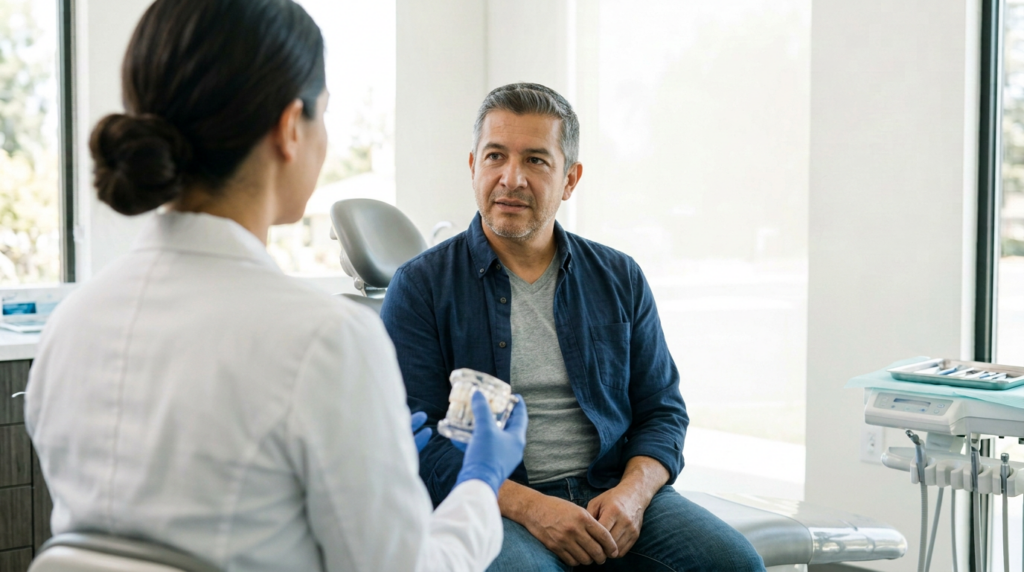
Questions to Ask Before Dental Implant Treatment
- How does smoking affect my specific case?
- Are my gums healthy enough right now?
- Is my bone suitable, or will I need grafting?
- Should we postpone treatment?
- What do I need to do before and after surgery?
- How will you monitor my healing, including after I’m back home?
- How many visits should I plan for?
- What maintenance will I need long term?
- What non-implant alternatives should I consider?
Considering Dental Implants in Tijuana?
Smoking doesn’t carry the same risk for everyone, but it should never be ignored or hidden. At Allo Dental, our multidisciplinary team reviews your gums, bone, medical history, habits and goals before recommending any treatment.
Send us your questions or dental records and we’ll help you understand your next steps toward a personalized treatment plan.
References
- Chrcanovic BR, Albrektsson T, Wennerberg A. Smoking and dental implants: A systematic review and meta-analysis. Journal of Dentistry. 2015;43(5):487-498. PubMed
- Mustapha AD, Salame Z, Chrcanovic BR. Smoking and Dental Implants: A Systematic Review and Meta-Analysis. Medicina. 2022;58(1):39. Full text
- Naseri R, Yaghini J, Feizi A. Levels of smoking and dental implants failure: A systematic review and meta-analysis. Journal of Clinical Periodontology. 2020. DOI
- The Effects of Smoking on Dental Implant Failure: A Current Literature Update. Dentistry Journal. 2024;12(10). Full text
- Schwarz F, Derks J, Monje A, Wang HL. Peri-implantitis. Journal of Clinical Periodontology. 2018;45(Suppl 20):S246-S266. DOI
This article is for educational purposes only and does not replace an individual dental examination, diagnosis or treatment recommendation. Treatment timelines are approximate and may vary based on clinical conditions, healing and each patient’s needs.
In This Article
- Can Smokers Get Dental Implants?
- Why Does Smoking Affect Dental Implants?
- Does Smoking Increase the Risk of Implant Failure?
- Can Smoking Affect Bone Grafting?
- Does Smoking Cause Peri-Implantitis?
- Will I Have to Quit Smoking Before Getting Implants?
- What About Vaping or Other Nicotine Products?
- What Else Decides If I’m a Candidate?
- How Can Smokers Lower Their Implant Risk?
- Planning Implant Treatment in Tijuana From the U.S.
- Can I Send My Dental Records Before Traveling?
- Questions to Ask Before Dental Implant Treatment
- Considering Dental Implants in Tijuana?
Ready to Get Started?
Our team can help you understand your options and plan the next steps for your dental treatment.
☎ +1 (619) 489-9292